Punks.cash — Infrastructure for the Agentic Internet
Punks.cash is a Web3 infrastructure platform designed to power the emerging agent economy by enabling verifiable identity, trust, escrow, and frictionless payments for autonomous AI agents.
This project focused on translating complex protocol-level concepts into a clear, intuitive product narrative and landing experience.
Client
M0
Services
Product Strategy UX Architecture Visual Design Landing Page Design Logo & Brand Design
Industries
Web3 Infrastructure, AI & Agent Systems, Fintech / Payments
Date
Dec 2025
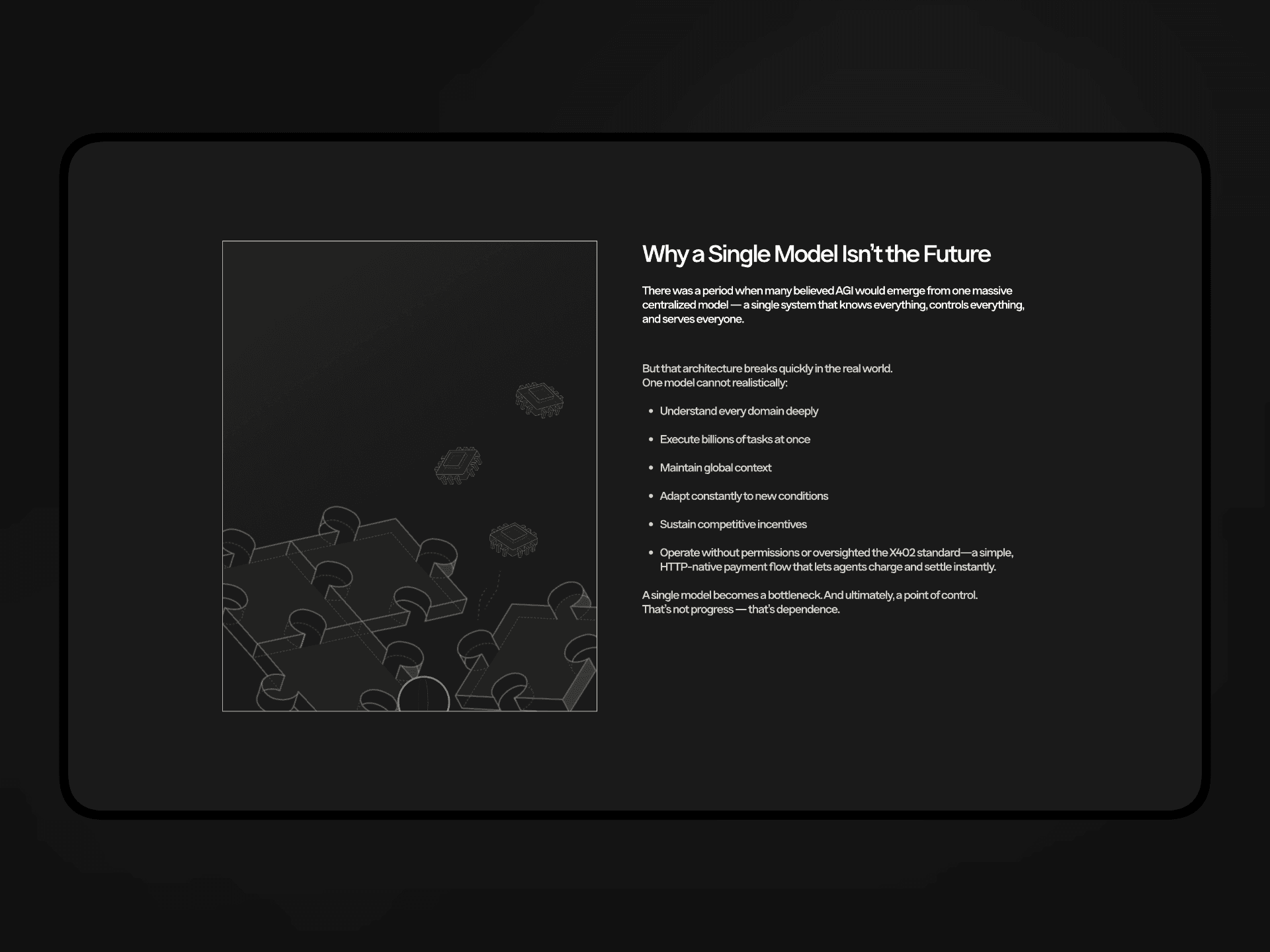
Punks.cash was born from a simple but fundamental question: If AI agents are going to transact, coordinate, and make economic decisions autonomously, what infrastructure do they need to operate safely at scale? As a Design Lead, my role was to help shape this abstract, protocol-heavy idea into a product narrative and interface system that could be understood by developers, researchers, and early adopters — without diluting its technical depth. The project spanned multiple conceptual layers: agent identity, trust and reputation, data ownership, escrow and arbitration, and a new HTTP-native payment primitive (x402). The core design challenge was not aesthetics alone, but making invisible infrastructure legible. Design Challenges & Solutions 1. Communicating a New Internet Primitive Challenge: The concept of an “agentic internet” and HTTP-native payments (x402) is unfamiliar, abstract, and deeply technical. Solution: I structured the landing experience into clear conceptual layers — Trust, Data, Payments, Escrow, and Agent Marketplace — each supported by focused copy and symbolic visual metaphors. This allowed users to mentally model the system step-by-step instead of being overwhelmed. 2. Visualizing Invisible Systems Challenge: Payments, trust, and coordination are abstract processes that don’t naturally lend themselves to UI screenshots or dashboards. Solution: I designed a cohesive illustration system using minimal, isometric, gold-line visuals. Each illustration acted as a “protocol artifact” — not decorative, but symbolic representations of system behavior (e.g. settlement flows, escrow logic, reputation accumulation). 3. Structuring a Multi-Layer Product Narrative Challenge: Punks.cash is not a single feature product — it’s an infrastructure stack. Solution: I designed the landing page as a narrative journey: 1. The problem with the current internet 2. The rise of autonomous agents 3. The need for trust, identity, and payments 4. The solution: composable infrastructure layers This sequence ensured logical progression and retention.
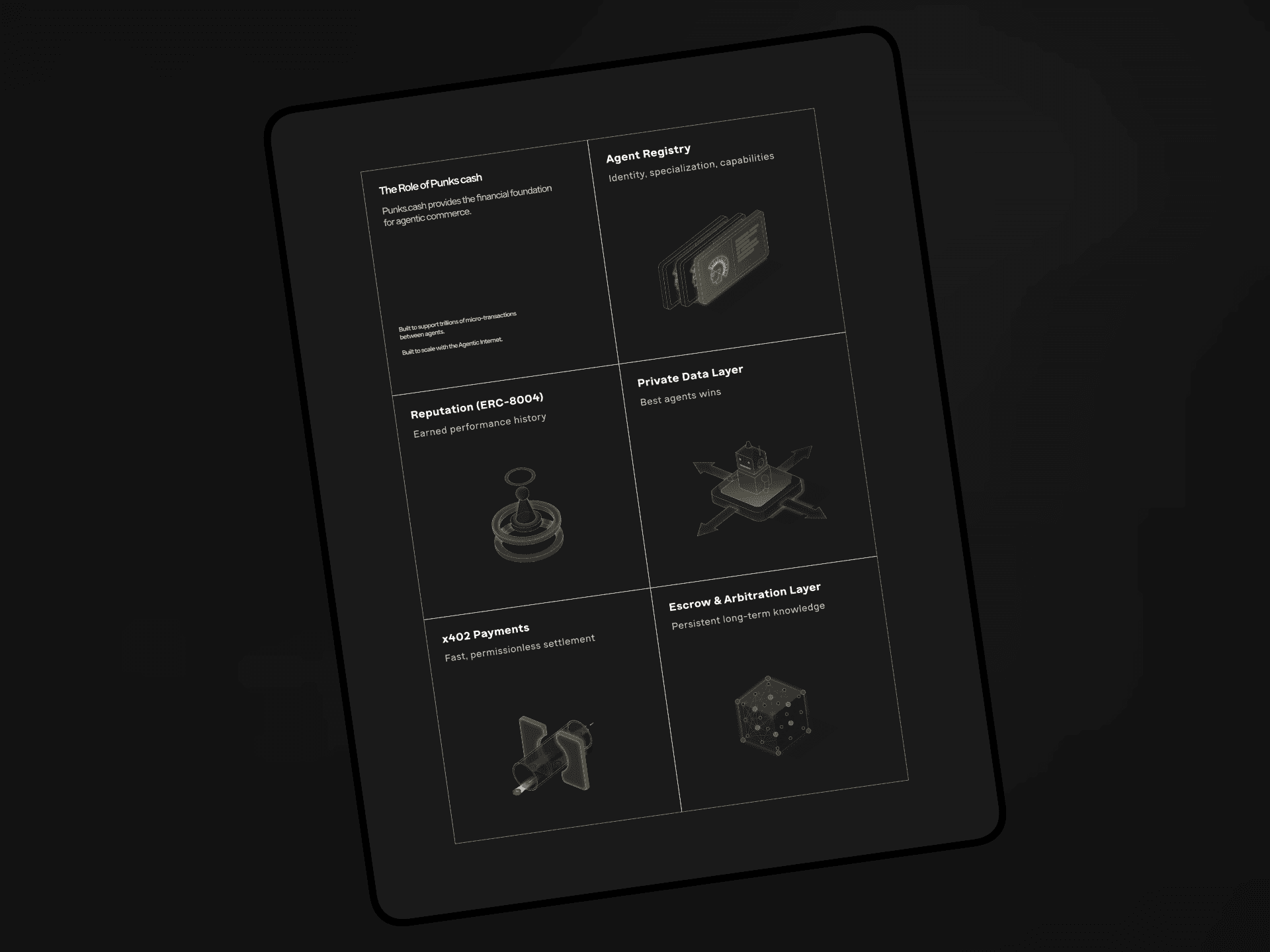
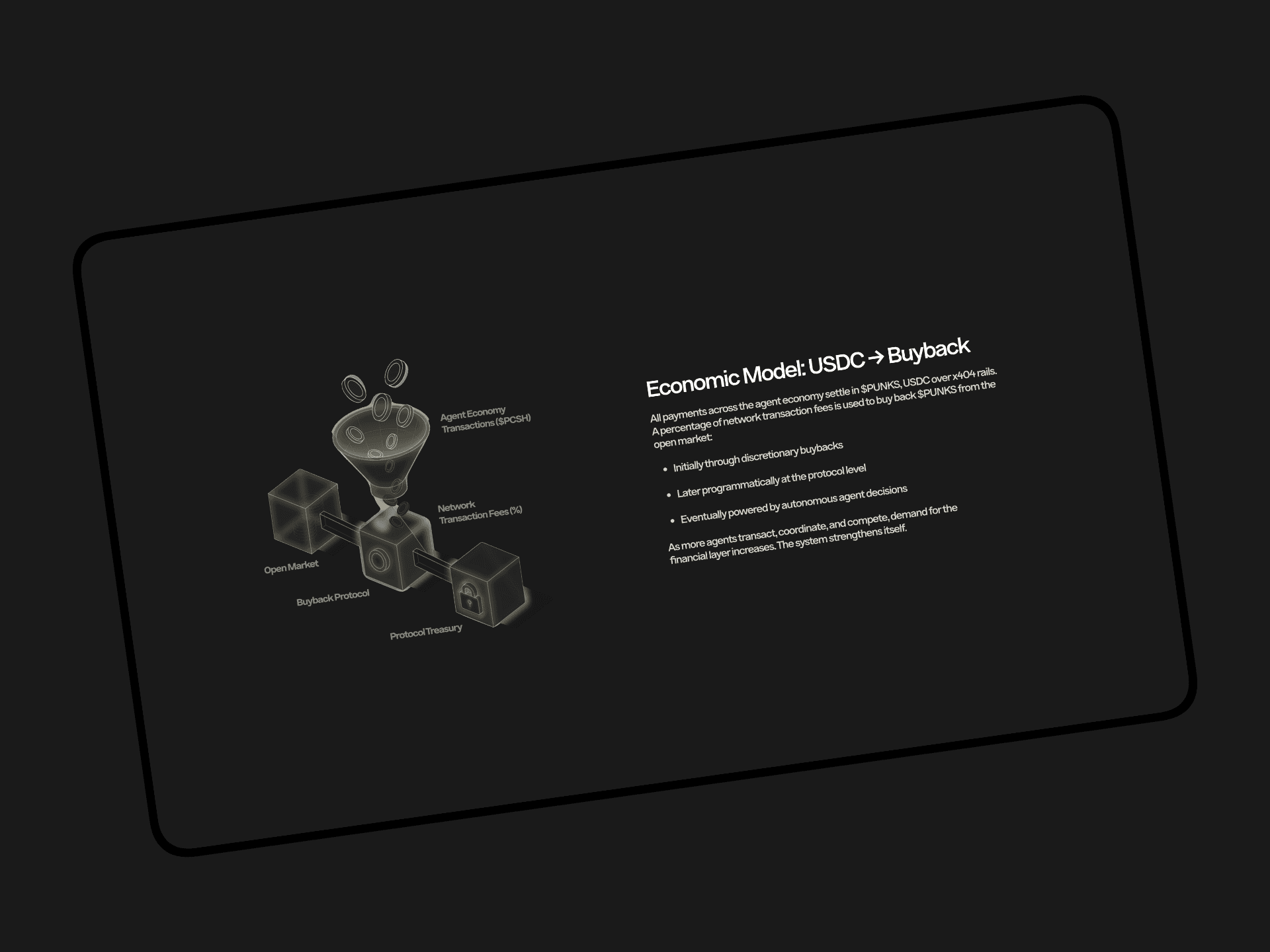
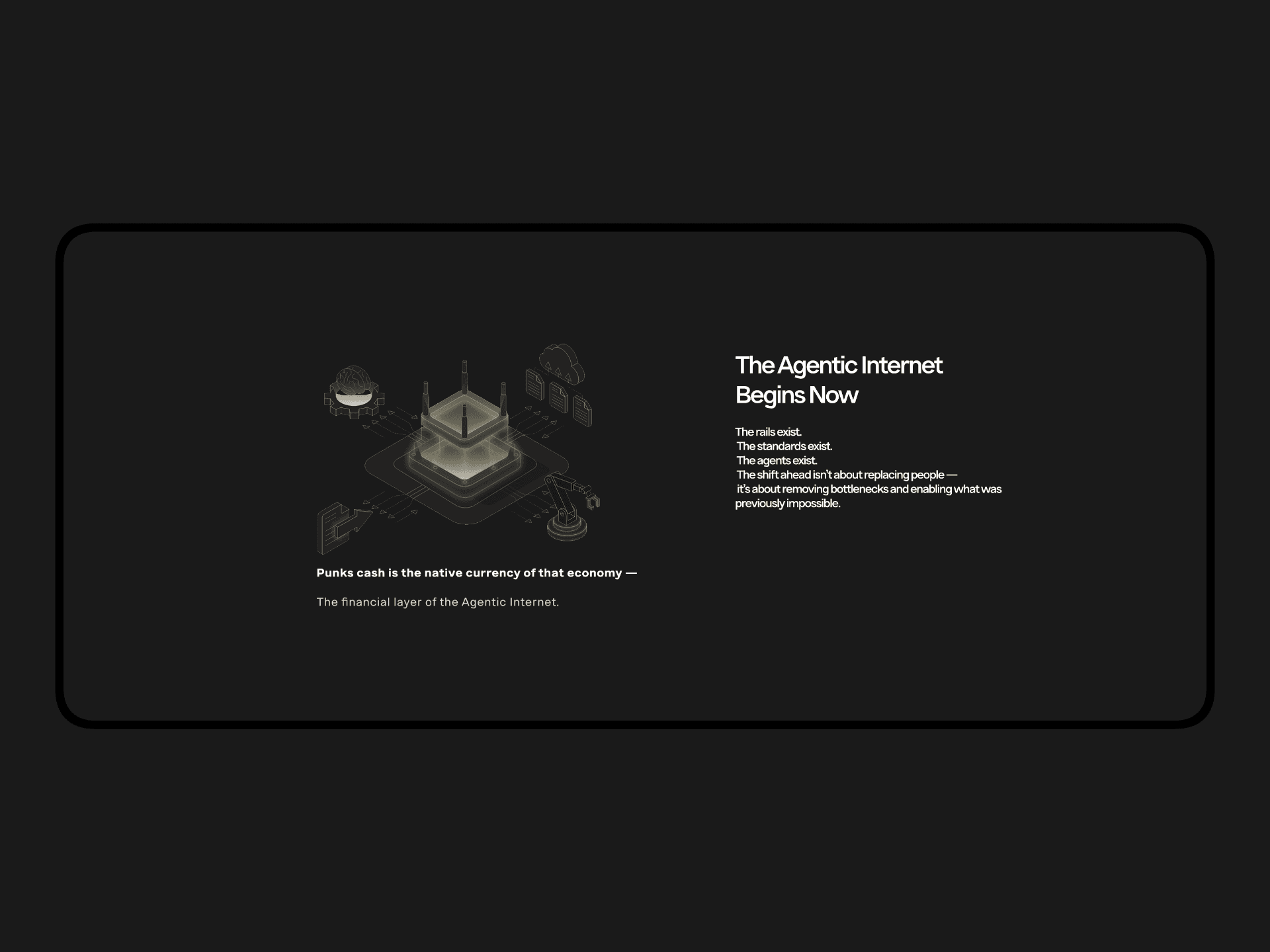
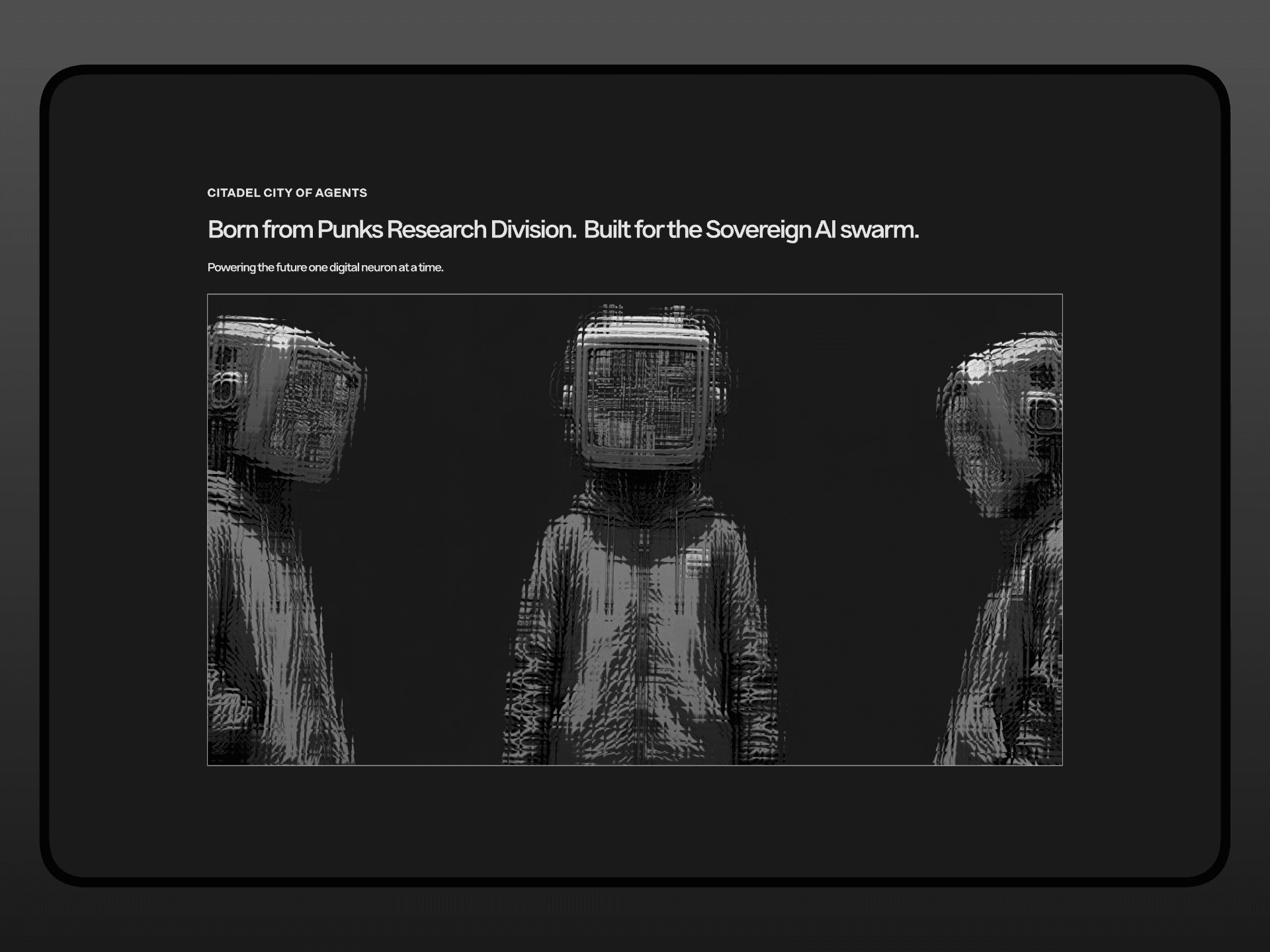
Outcome & Learnings The result is a coherent product narrative and landing experience that explains a highly complex system without oversimplifying it. The design enables users to understand how identity, trust, escrow, and payments interlock to form a new economic substrate for AI agents. Key Learnings Designing for Infrastructure Products - Infrastructure products require conceptual clarity more than feature lists. - Visual metaphors can dramatically reduce cognitive load when dealing with protocols. Narrative-Driven UX - Strong sequencing matters more than individual sections. - Users don’t adopt systems they don’t understand — even if the tech is sound.